The Mandala as Modern Identity: From Spiritual Symbol to Brand Emblem
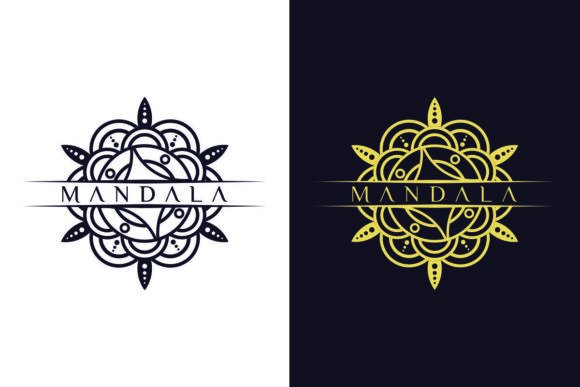
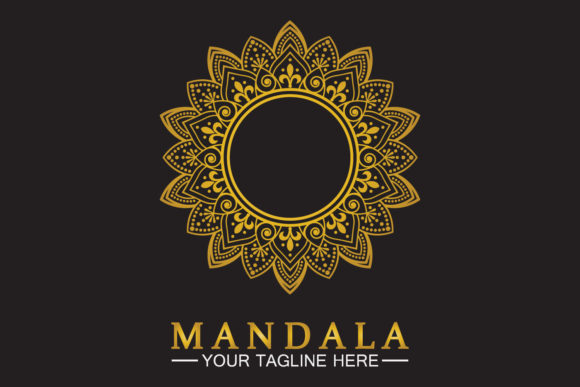
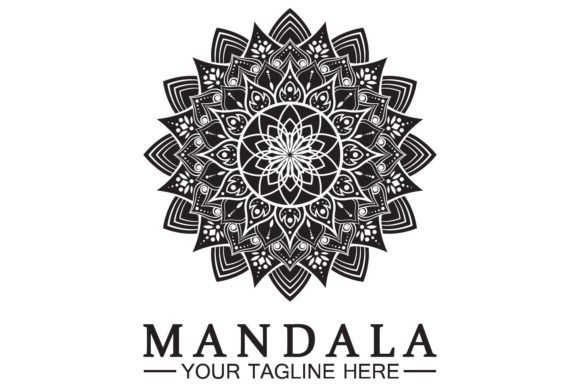
In the realm of visual identity, few motifs carry the weight, history, and aesthetic versatility of the mandala. Traditionally, these intricate circular designs, often radiating from a central point, have served as sacred tools in Hindu and Buddhist traditions, representing the universe, a spiritual journey, or a cosmic diagram. Today, however, the mandala has transcended its purely religious context to become a powerful and sought-after asset in contemporary design, particularly in the creation of logos and brand symbols. A Mandala Logo Design Vector Template represents the practical bridge between this ancient art form and modern commercial needs, offering a structured yet creative foundation for businesses seeking a unique visual voice.
The Allure of Circular Harmony in Branding
The fundamental structure of a mandala—its symmetry, balance, and concentric complexity—naturally aligns with core branding principles. A brand seeks to present itself as cohesive, reliable, and centered. The circular form implies inclusivity, wholeness, and protection. When adapted into a logo, template, or emblem, this form instantly communicates these values without a single word. For industries where harmony, natural balance, and organic growth are key themes, such as wellness, eco-friendly products, yoga studios, and spa services, the mandala offers an almost intuitive graphic concept. Its linear and ornamental qualities can be rendered with precise geometric clarity or with flowing, natural lines reminiscent of plants, flowers, and leaves.
Adapting Tradition: From Sacred Geometry to Business Icon
The transition from a religious symbol to a commercial sign requires thoughtful adaptation. Designers working with a mandala-based vector template are not simply copying ancient art; they are engaging in a process of creative reinterpretation. The core vocabulary of the mandala—the radial patterns, the petal-like forms, the intricate decoration—is extracted and filtered through the needs of the brand. A company selling cosmetics might use the template to create a logo that emphasizes beauty and elegance, perhaps incorporating gold accents and softer floral elements. A health or meditation app might leverage the same underlying structure to project calm, focus, and a journey inward, using cleaner, more abstract lines.
This is where the value of a professional Mandala Logo Design Vector Template becomes evident. Such a resource provides the scalable, editable vector framework—the outline and core geometry—while leaving ample room for the infusion of brand-specific personality. The designer can add, subtract, or modify elements to align with the company’s ethos, whether it’s luxury, organic simplicity, or dynamic creative energy. The result is a logotype that feels both timeless and contemporary, rooted in a universal art form yet distinctly modern.
Practical Applications Across Diverse Industries
The application of mandala-inspired design is remarkably broad. Beyond the obvious fit with spa and wellness brands, we see its influence in sectors that value precision, heritage, and decorative appeal.
- Boutique & Luxury Retail: High-end brands, especially in fashion, jewelry, or home decor, often use mandala elements to convey craftsmanship, intricacy, and exclusive beauty. A monogram set within a refined mandala background can serve as a stunning emblem for a company card or packaging.
- Eco-Conscious & Natural Product Brands: For businesses centered on sustainability, the mandala’s connection to nature and organic patterns is potent. Templates can be adapted to incorporate specific leaf shapes or botanical arrangements, making the identity visually synonymous with its eco values.
- Creative & Educational Platforms: Studios, workshops, or online platforms focusing on art, mindfulness, or culture may use a mandala graphic to represent exploration, learning, and the interconnectedness of ideas.
- Cultural & Heritage Enterprises: Some businesses draw direct inspiration from specific traditions, such as Islamic or arab geometric art, which shares a deep affinity with mandala principles of infinite pattern. A carefully crafted design here communicates respect for heritage while building a modern brand.
The Vector Template as a Creative Catalyst
For the designer, entrepreneur, or creative hobbyist, starting with a pre-structured vector template is not a limitation but a liberation. It removes the initial hurdle of constructing the complex, balanced radial symmetry that defines a mandala, which requires significant technical skill in design software. Instead, the user begins with a solid, scalable foundation—a clean line art structure that is already mathematically balanced and visually coherent. This allows the creative energy to be directed toward customization: choosing color palettes, adjusting line weights, introducing negative space, or integrating specific elements like a company’s initials or a product silhouette.
The vector format is crucial. It ensures the final icon or logo is resolution-independent, capable of scaling from a tiny mobile app icon to a large storefront sign without loss of quality. This practicality makes such templates invaluable for real-world business implementation.
Key Considerations for Effective Implementation
While the aesthetic appeal is strong, successfully using a mandala-inspired design requires strategic thought.
- Cultural Sensitivity: Given its sacred origins, it is wise to consider the context and audience. A design that borrows heavily from specific religious mandalas for a purely commercial product might be seen as appropriative. The skillful approach, often facilitated by a more abstract and generic template, is to evoke the feel and principles of the form—balance, harmony, focus—without directly replicating culturally specific sacred art.
- Simplicity vs. Complexity: A mandala can be incredibly detailed. In branding, however, simplicity often aids recognition and recall. The template should serve as a starting point from which a simplified, more focused core symbol can be extracted. The most effective logos might use only a segment or a core motif of the full mandala circle.
- Versatility Across Media: The designed logo must work in various applications—digital, print, embroidered, etched. Testing the design derived from the vector template in black and white, on dark backgrounds, and at small sizes is essential to ensure its beautiful intricacies remain clear and legible as a functional sign.
- Alignment with Brand Narrative: The design should not be chosen merely for its beauty. It must connect narratively to the brand’s story. Does the circular journey reflect the customer experience? Do the interconnected lines represent the community the brand builds? This narrative layer gives the logo deeper meaning and resonance.
The Future of Organic Geometry in Identity Design
Trends in visual identity often swing between stark minimalism and rich organic complexity. Currently, there is a growing appreciation for designs that feel human, connected to nature, and intellectually engaging. The mandala, and the resources like a professional Mandala Logo Design Vector Template that make it accessible, sit perfectly within this trend. They offer a path to creating logos that are not just markers of a business, but visual stories about balance, growth, and integration.
For the small business owner opening a yoga studio, the artisan launching a line of natural cosmetics, or the designer crafting an identity for a mindfulness app, these templates provide a foundation of profound aesthetic heritage. They enable the creation of an identity that is both an art piece and a commercial tool, a decoration and a functional element. In the end, the modern mandala logo stands as a testament to how ancient symbols can be respectfully and innovatively reimagined to serve contemporary communication, carrying forward their essence of unity and purpose into the dynamic world of brand and graphic design.